That is what Selena Zito writes in Townhall, as she reports from Powhatan Point (Belmont County, on the Ohio River). Traditionally Democratic areas voted Republican in 2010, and are poised to do so again if our jobs situation doesn't improve.
Let me add my own warning. If President Obama is re-elected, the job situation will get worse, not better. He is owned by the New York bankers (further evidence). Our only recourse then will be independence.

Showing posts with label Ohio economy. Show all posts
Showing posts with label Ohio economy. Show all posts
Tuesday, May 17, 2011


Wednesday, April 27, 2011
Will the real Governor Kasich please stand up?
 David Boaz at the Cato Institute thinks that our governor has become inhabited by an alien life form.
 As Dennis Cauchon reports in USA Today, Ohio is spending $1.4 billion on economic development and consuming the work of 400 employees. Most other states are spending a few million. Our largest state, California, has only 25 employees working on it...
A USA TODAY review of two dozen of Ohio’s state-funded projects found many behind schedule or failing to deliver the jobs or investment returns promised.
Mr. Boaz then asks:
And what of Governor Kasich, once a budget-cutting House Budget Committee chairman and opponent of corporate welfare, who was once pictured on 60 Minutes with the Cato Handbook for Congress sitting on his desk? Kasich would stop this nonsense, right? Well, not quite:Such massive governmental handouts to private corporations at a time of fiscal duress violates the spirit, if not technically the letter, of the Ohio Constitution (Article VIII, Section 4):
Kasich, the new governor, has moved some programs into a quasi-private operation called JobsOhio that he hopes will be faster and more effective.This new approach positions the government to act more like a risk-taking investor, [Kasich's economic development director Mark] Kvamme says…. [More here.]Kasich is expanding Ohio’s tradition of large-scale, government-directed development programs. His new budget proposes spending an extra $100 million a year in liquor profits on economic development. That amount alone dwarfs economic development spending in almost every other state.What have you done with John Kasich, Ohio? Is this like the movie Dave, where you’ve found an actor to stand in for the actual governor? If not, then I hope Governor Kasich will decide to add government-directed economic development to his list of needed budget cuts.
The credit of the state shall not, in any manner, be given or loaned to, or in aid of, any individual association or corporation whatever; nor shall the state ever hereafter become a joint owner, or stockholder, in any company or association in this state, or elsewhere, formed for any purpose whatever. (1851)
I think most Ohioans voted for the old budget-cutting Kasich, not the new corporation-building one. Please, let's have the old one back.
Friday, March 18, 2011
For those of you who have not checked for a while...
 |
| One buckeye sterling |
Gold, per troy ounce: $1,418.94
Silver, per troy ounce, $35.14
Buckeye sterling: $24.49 (= bullion value of one pre-1965 U.S. silver dollar, adjusted for the difference between the .900 fineness of the silver dollar and the .999 fineness of today's bullion coins).
We need a bank in Ohio that will set up checking and savings accounts in gold or silver. I don't have the capital, but I can't believe that it would not be well received...
Friday, February 4, 2011
How independence could help Ohio's budget crisis
I have thought this for some time, but Russell Longcore at Dump DC says it better. It is short, so I am quoting it in full:
The Bankruptcy of American Colony/States
Some people ask why we would want independence and lose all those federal funds. They are not thinking clearly. All of those federal funds would be available to Ohio government. Well, then, how about the fact Ohio is getting $1.05 from Washington for every dollar it sends there? ** Vermont secessionist Frank Bryan has a good answer for that: "Would you rather have $10,000 to spend any way you want, or $10,500 that you have to spend as I say?" ***
* Rhode Island, with a ratio of 19.19% was first, Nebraska (2.91%) was 50th.
** Tax Foundation "Federal Spending Received per Dollar of Taxes, FY 2005," Federal Fiscal Year 2005 (ending Sept. 30, 2005) is the latest year available.
*** Quoted in Bill Kauffman, Bye Bye Miss American Empire (White River Junction, VT: Chelsea Green Publishing, 2010), p.233, adapted to Ohio's ratio.
The Bankruptcy of American Colony/States
We all know that Washington’s government is broke. But nearly every colony/state of the Union is also in desperate financial trouble. They have nearly all spent profligately. But their underfunded pension obligations are going to sink them aside from too much spending. And Federal law doesn’t permit colony/states to declare bankruptcy.Mr. Longcore also has a link to The Daily Beast has an article about colony/state bankruptcy that he strongly recommends, to show how bad your state is doing. It measures relative bankruptcy by the ratio between state debt and state Gross Domestic Product. By that measure, Ohio is doing relatively well. Despite our $8 billion budget deficit, which The Daily Beast understates as $3 billion, our $27 billion of state debt against $471.3 billion of Gross Domestic Product (both 2009 figures) gives us a debt/GDP ratio of 5.93%, ranking us 44th of the 50 states in debt burden.* Our unfunded pension and retirement health care liabilities total $46.5 billion.
I just want to point out that if a colony/state seceded from the Union to become a nation once again, it would likely shed enough Federal debt and Federally-mandated spending that it could balance its budget once again. And now the new nation would not be subject to Federal bankruptcy laws. That doesn’t mean it should stiff its creditors, but it could facilitate restructuring and payment of its obligations.
Also remember the old saying…”The thinking that got us here will not get us where we want to go.” There will need to be an entirely new group of leaders who move away from the republic to secession and new nationhood.
Some people ask why we would want independence and lose all those federal funds. They are not thinking clearly. All of those federal funds would be available to Ohio government. Well, then, how about the fact Ohio is getting $1.05 from Washington for every dollar it sends there? ** Vermont secessionist Frank Bryan has a good answer for that: "Would you rather have $10,000 to spend any way you want, or $10,500 that you have to spend as I say?" ***
* Rhode Island, with a ratio of 19.19% was first, Nebraska (2.91%) was 50th.
** Tax Foundation "Federal Spending Received per Dollar of Taxes, FY 2005," Federal Fiscal Year 2005 (ending Sept. 30, 2005) is the latest year available.
*** Quoted in Bill Kauffman, Bye Bye Miss American Empire (White River Junction, VT: Chelsea Green Publishing, 2010), p.233, adapted to Ohio's ratio.
Monday, January 3, 2011
Why I will never be elected Governor...
The Columbus Dispatch has a budget simulator, which can help you decide where you would find the $8 billion Ohio needs to balance its fiscal 2012-13 budget. It consists of 34 multiple-choice questions. The selections you make generate the "headlines" shown.
My values were:
- Do not increase tax rates, but make existing taxes more consistent in their application.
- Make cuts across the board to spread the pain as evenly as possible. (Note that I just proposed cutting my own salary by 3%) ...
- Pay for everything now, not delaying it until later by infusion of one-time funds.
Of course, a budget simulator has its limitations -- in reality, I could have fine-tuned the surplus to a smaller amount by reducing tax increases or spending cuts by lesser amounts. The value of the simulator is to show just how politically and morally difficult it is to make these kinds of decisions. I particularly hated the "drug tax," but thought its economic impact would be less harmful than directly increasing the income or sales tax.
On the long run, I favor abolition of the income tax, a simpler property tax that taxes only the unimproved value of property, and working out a gradual program of reducing and redirecting state services and entitlements to minimize (but of course, not eliminate) the pain to individuals.
Tomorrow's "news," from The Columbus Dispatch budget simulator -- if I were Governor:
Governor's budget plan more than erases deficit
Thomas surplus called 'painful, needless burden'
The governor today gave the General Assembly a proposed state budget with a surplus of $43 million.
The plan brought immediate objections from lawmakers and a host of interest groups, especially those representing taxpayers, who excoriated the governor for seeking to raise a surplus 'during the worst recession in two generations.'
Tomorrow's headlines if Harold Thomas were governor:
- Poor and sick decry 'drug tax' at huge Columbus rally
- Lawmakers heed loud tax protests from Ohio families
- Thomas ripped for 'robbing' local governments
'Staggering' new local taxes predicted
- Medicaid cuts called 'brutal' to Ohio's poor
- Business tax hike will 'strangle' growth, critics claim
- Homeowners vow to defeat Thomas
- Disabled veterans brandish crutches, canes at Governor's Residence
Your choices
- Property tax subsidy: Reduce subsidy by 5% (raises $170 million)
- Commercial activities tax: End exemption for first $1 million in sales (raises $250 million)
- Exemptions: End sales-tax break for packaging and packaging equipment (raises $460 million)
- Exemptions: Apply sales tax to prescription drugs (raises $1.3 billion)
- Exemptions: Cut income-tax deductions for spouse and children by half (raises $500 million)
Taxes
- Aid to K-12 education: Halve aid that makes up for elimination of tangible personal property tax (saves $1.1 billion)
- Aid to colleges & universities: Cut aid by 10% (saves $340 million)
- Aid to cities & towns: Halve aid that makes up for elimination of tangible personal property tax (saves $380 million)
- Aid to libraries: Cut aid by 25% (saves $190 million)
- Spending on adult and youth prisons: Cut spending by 25% (saves $900 million)
- Medicaid: End optional coverage for dental, vision, podiatry and hospice (saves $1 billion)
- Medicaid: Cut spending for nursing-home care by 5% (saves $260 million)
- Medicaid: Cut spending for hospital care by 5% (saves $110 million)
- State employees: Cut pay by 3% (saves $200 million)
- Department of Mental Health: Cut by 20% (saves $180 million)
- Close other state departments: Developmental Disabilities (saves $634 million)
- Close other state departments: Veterans Services (saves $64 million)
Spending
- Allow oil and gas drilling on state land (raises $25 million)
Sell or lease state assets
To which can be added:
- State employee unions excoriate governor for salary cuts
- House Democrats call for impeachment proceedings against Libertarian Governor.
The 2011 Legislative Program
Last year, we set five goals for the 128th General Assembly:
- Gradually repeal the Ohio income tax (HB 400).
- Redirect federal tax funds to the Ohio Department of Taxation (on the drawing board, details).
- Enact an Honest Money initiative (on the drawing board).
- Enact a Constitutional amendment to nullify mandatory participation in a federal health care program (HJR 3, SJR 7, HB 489, SB 244).
- Nullify federal law for weapons manufactured in Ohio (HB 315).
The partisan division of the General Assembly between a Democratic House and a Republican Senate resulted in the smallest legislative output in many years. In addition, legislative research on the second goal has failed so far to produce a practical solution to the problem.
We are no longer advocating the state sovereignty resolutions. They were valuable two years ago as educational tools to help the legislators and the people understand the concept of state sovereignty; but they were symbolic in character. Largely spurred by the Tea Parties and the federal health care initiative, we have moved on to asserting that sovereignty through nullification bills.
Here are the goals we recommend for the 129th General Assembly:
- Gradually repeal the Ohio income tax.
- Enact an Honest Money act to facilitate the use of gold and silver in payment of taxes, thus encouraging their use in everyday transactions.
- Enact a Constitutional amendment to nullify mandatory participation in a federal health care program, which would accomplish the objective of the Ohio Project’s petition campaign.
- Nullify federal law for weapons manufactured in Ohio.
- Rebuild the organized state militia, to protect Ohioans from illegal immigration, terrorism, and egregious military actions against the people of Ohio by the federal government.
Items 1 and 3 will strengthen our state’s economy. The other items are necessary to protect the rights of our people, and are critical elements to making good a declaration of independence, if all else fails.
Additional information on pending liberty-related legislation is available in the Ohio Liberty Council site.
Saturday, November 20, 2010
Glenn Beck coming to Wilmington Dec. 15
Update Nov. 22: The statement below that Wilmington is recovering without government help is not true. Here is the correction.
I probably like Glenn Beck a little too much for my own good. I know he doesn't get it about Lincoln, is too pro-war any war to suit me, and has a bit too much of the huckster in him. On the other hand, it is obvious he has a good heart and has presented in a popular, easy-to-understand way basic the principal concepts of U.S. history and Judeo-Christian morality.
The story of Wilmington (county seat ofBrown Clinton* County in southwestern Ohio a bit northeast of Cincinnati) has clearly touched his heart. Wilmington (population 12,000) was a freight hub for DHL, when that company decided to close it in November 2008. Two-thirds of the town had been employed by DHL.
However, the town is recovering, without governmental help. Apparently, most of the help is coming from local churches. Mr. Beck is visiting the town to show it off to America as an example of recovery without governmental help.
* My mistake. See comments for additional discussion.
Virtual buckeye to the Ohio Liberty Council on Facebook.
I probably like Glenn Beck a little too much for my own good. I know he doesn't get it about Lincoln, is too pro-war any war to suit me, and has a bit too much of the huckster in him. On the other hand, it is obvious he has a good heart and has presented in a popular, easy-to-understand way basic the principal concepts of U.S. history and Judeo-Christian morality.
The story of Wilmington (county seat of
However, the town is recovering, without governmental help. Apparently, most of the help is coming from local churches. Mr. Beck is visiting the town to show it off to America as an example of recovery without governmental help.
* My mistake. See comments for additional discussion.
Virtual buckeye to the Ohio Liberty Council on Facebook.
Tuesday, September 14, 2010
How to fill the $8 billion budget hole
 Ken Matesz, Libertarian candidate for Governor has an answer; but frankly, it takes my breath away. According to Marc Kovac at the Kent Record-Courier, Mr. Matesz wants to:
(Full text of speech)
- Eliminate the Ohio income tax by fiscal 2013
- Cut state spending by 40%
- Immediately stop all state borrowing
- Sell the Ohio Turnpike, the state universities, the Bureau of Workers Compensation, and all state parks and lands
- Allow video slots at horse racing tracks
- Reduce the prison population by 25,000 inmates
Mr. Matesz's plan needs some tweaking; but again, at least it is a plan, and he deserves credit for formulating a solution to Ohio's toughest challenge. True leadership requires us as citizens to accept that the solution to a problem may be hard to take -- but will greatly benefit us later."Neither of my high-dollar, special-interest-supported opponents is prepared to make the tough choices that will position Ohio to become the freest, most business friendly, most family friendly and most productive state in the union," he said...
He added, "We don't need a few more decades of Democrats and Republicans with the same policies that got us to where we are today. There really is no difference between the policies of Kasich and Strickland. Both of them are big government politicians, big spenders, who continue to offer no real solutions."
As I wrote in an earlier headline, Mr. Matesz has laid down the gauntlet. Will either of his opponents pick it up?
Remember, the lesser of two evils is still evil. Ohio needs solutions, not spin.
Friday, September 10, 2010
Libertarian lays down the gauntlet on income tax
The Libertarian Party announced yesterday that its gubernatorial candidate Ken Matesz will announce a detailed plan for resolving Ohio's projected $8 billion deficit for 2011-2012. The plan will include a gradual abolition of the Ohio income tax.
No such plan appears to be forthcoming from either of the major party candidates.
The announcement will be held on Monday, Sept. 13, 2 pm, in the Ladies' Gallery at the Ohio Statehouse in Columbus.
"Serious problems call for serious candidates. The Matesz campaign and the Ohio Libertarian Party are ready to step up to the challenge with a detailed plan that eliminates the deficit while cutting taxes. The other major party candidates are unprepared to tell you their plans because they have none," said Libertarian Party Chairman Kevin Knedler.
No such plan appears to be forthcoming from either of the major party candidates.
The announcement will be held on Monday, Sept. 13, 2 pm, in the Ladies' Gallery at the Ohio Statehouse in Columbus.
"Serious problems call for serious candidates. The Matesz campaign and the Ohio Libertarian Party are ready to step up to the challenge with a detailed plan that eliminates the deficit while cutting taxes. The other major party candidates are unprepared to tell you their plans because they have none," said Libertarian Party Chairman Kevin Knedler.
Tuesday, March 16, 2010
Unemployment is worse than we thought
Last month, I reported on a Buckeye Institute for Public Policy study that detailed the sluggish employment growth in Ohio in the last twenty years. It turns out they were too optimistic, as director Matt Meyer said to Bob Connors at Columbus radio station WTVN yesterday.
Mr. Meyer attributes the employment problem to Ohio's high cost of government and favorable climate for unions. He does not believe the situation will significantly improve until Ohio becomes a Right to Work state, like 22 Southern and Western states which have cheerfully accepted businesses emigrating from Ohio during that period.
Mr. Meyer attributes the employment problem to Ohio's high cost of government and favorable climate for unions. He does not believe the situation will significantly improve until Ohio becomes a Right to Work state, like 22 Southern and Western states which have cheerfully accepted businesses emigrating from Ohio during that period.
Friday, February 19, 2010
The State of the State: another view
A few weeks ago, Gov. Strickland gave his State of the State address, in which he focused on governmental solutions to produce jobs in Ohio, which met with a skeptical response from this corner. While I accepted the idea of "public-private partnerships" in the context of the existing political system in Ohio, only a radical decentralization of government will provide a long-term solution.
Now, the Buckeye Institute has produced a report supporting my post earlier today, and detailing the root causes of Ohio's unemployment. We have an employer-unfriendly labor climate, high taxes; and in the Buckeye Institute's view, too much government. Don't let the heft (111 pages) of the report intimidate you. The report itself is only 15 pages long, but the supporting data includes a page for each county supporting the Institute's conclusions.
Now, the Buckeye Institute has produced a report supporting my post earlier today, and detailing the root causes of Ohio's unemployment. We have an employer-unfriendly labor climate, high taxes; and in the Buckeye Institute's view, too much government. Don't let the heft (111 pages) of the report intimidate you. The report itself is only 15 pages long, but the supporting data includes a page for each county supporting the Institute's conclusions.
Federal Reserve Bank: "Unemployment will remain high two more years"
The Associated Press (via the Plain Dealer) reports that the Fed expects unemployment to remain high for two more years, though "a sizable minority" thinks that it will take five to six more years for the economy and the job market to return to normal.
Ohio's rate, of course, is higher (officially 10.9% in December), and it is well known that the definition of "unemployment" tends to understate the rate. Unemployment is defined by the Ohio Department of Job & Family Services as representing "persons who were not employed during the reference week, but who were actively seeking work, waiting to be called back to a job from which laid off, or waiting to report within 30 days to a new payroll job." It does not include those who have given up or are doing casual labor. Unemployment rate is defined as "unemployment as a percentage of the civilian labor force. "
So, there you have it: It's 1980-85 all over again, until 2012, maybe even into 2016.
And people wonder why I'm a secessionist...
The Fed said the unemployment rate this year could hover between 9.5 percent and 9.7 percent and between 8.2 percent and 8.5 percent next year. By 2012, the rate will range between 6.6 percent and 7.5 percent, it predicted.
Those forecasts are little changed from projections the Fed released in late November. But they suggest unemployment will remain elevated heading into this year's congressional elections and the presidential election in 2012. A more normal unemployment rate would be between 5.5 percent and 6 percent.
Ohio's rate, of course, is higher (officially 10.9% in December), and it is well known that the definition of "unemployment" tends to understate the rate. Unemployment is defined by the Ohio Department of Job & Family Services as representing "persons who were not employed during the reference week, but who were actively seeking work, waiting to be called back to a job from which laid off, or waiting to report within 30 days to a new payroll job." It does not include those who have given up or are doing casual labor. Unemployment rate is defined as "unemployment as a percentage of the civilian labor force. "
So, there you have it: It's 1980-85 all over again, until 2012, maybe even into 2016.
And people wonder why I'm a secessionist...
Tuesday, January 26, 2010
Gov. Strickland's State of the State
Gov. Ted Strickland delivered a one-hour State of the State message today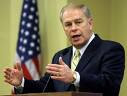 in the House Chambers at the Statehouse. I shall leave it to the print and broadcast media to report on the specifics, but will offer a few personal impressions.
One reason I have generally liked Gov. Strickland has been his vision. While I have a few disagreements with the way the vision has been executed, he deserves much credit for consistently pursuing and clearly articulating his vision for the State of Ohio. Today's speech focused on the challenge of increasing Ohio's employment. Gov. Strickland emphasized that the work of his administration to date has been to lay the infrastructure for future economic growth. He cited numerous special funds and public-private partnerships to build Ohio's renewable energy industry, provide venture capital and training for startup businesses, encourage insourcing to provide jobs for Ohioans, and to increase the market share of Ohio-grown farm products within Ohio. He also is working on the creation of university-private partnerships to help Ohio firms develop innovative products to fuel future economic growth.
He touched on the budgetary issues by noting that the personal property tax remains unfriendly to business growth, especially in the energy sector; university tuitions have increased more slowly in Ohio than in any other state; regulatory reforms have reduced the cost and business-unfriendliness of state government, and that Ohio has 5,021 fewer state employees than at the beginning of his term (January 2007).
The Governor and the General Assembly have the right priorities, and to their credit have aggressively pursued long-term goals, at a time when it would have been very easy to cut back to concentrate on immediate needs. That strategy might work in some states, but Ohio has had so much economic recession for so long, that pursuing a vision like this one is imperative if Ohioans are going to have opportunities in the future.
My greatest objection to his speech lies in the plethora of new programs he has devised to create these public-private partnerships and to foster access to venture capital. Today, these may seem like good ideas, and there is a fair chance that they will work; but he is creating a complex system that will be an administrative nightmare a few years from now.
Now, Gov. Strickland and the General Assembly need to keep an eye on Washington. It is fair to say that federal regulatory policy creates so much overhead on state governments, that it is the primary reason 49 of the 50 states are having difficulty balancing their budgets. At the same time, Washington and Columbus are beginning to work to cross-purposes. While Ohio wants to foster entrepreneurship, the feds want to increase governmental control over the private sector. The time will soon come when fiscal considerations will force us to choose between Ohio's clearly common-sense approach to economic development, and the District of Coercion's ideological approach.
We need to begin freeing Ohio's financial sector from the manipulations of New York. This can be accomplished in two ways: by enabling the use of gold and silver coin in payment of taxes and other transactions, which will help protect us from inflation of the U.S. dollar, and by creating a state bank modeled on North Dakota's to partner with local banks to provide those low-cost loans to entrepreneurs. Both actions will also contribute to a sound currency following Ohio's independence, in the event secession become necessary. By following this approach, which is part of The Ohio Republic's legislative program, he could achieve the goals of his public-private partnerships more simply and much more effectively.
in the House Chambers at the Statehouse. I shall leave it to the print and broadcast media to report on the specifics, but will offer a few personal impressions.One reason I have generally liked Gov. Strickland has been his vision. While I have a few disagreements with the way the vision has been executed, he deserves much credit for consistently pursuing and clearly articulating his vision for the State of Ohio. Today's speech focused on the challenge of increasing Ohio's employment. Gov. Strickland emphasized that the work of his administration to date has been to lay the infrastructure for future economic growth. He cited numerous special funds and public-private partnerships to build Ohio's renewable energy industry, provide venture capital and training for startup businesses, encourage insourcing to provide jobs for Ohioans, and to increase the market share of Ohio-grown farm products within Ohio. He also is working on the creation of university-private partnerships to help Ohio firms develop innovative products to fuel future economic growth.
He touched on the budgetary issues by noting that the personal property tax remains unfriendly to business growth, especially in the energy sector; university tuitions have increased more slowly in Ohio than in any other state; regulatory reforms have reduced the cost and business-unfriendliness of state government, and that Ohio has 5,021 fewer state employees than at the beginning of his term (January 2007).
The Governor and the General Assembly have the right priorities, and to their credit have aggressively pursued long-term goals, at a time when it would have been very easy to cut back to concentrate on immediate needs. That strategy might work in some states, but Ohio has had so much economic recession for so long, that pursuing a vision like this one is imperative if Ohioans are going to have opportunities in the future.
My greatest objection to his speech lies in the plethora of new programs he has devised to create these public-private partnerships and to foster access to venture capital. Today, these may seem like good ideas, and there is a fair chance that they will work; but he is creating a complex system that will be an administrative nightmare a few years from now.
Now, Gov. Strickland and the General Assembly need to keep an eye on Washington. It is fair to say that federal regulatory policy creates so much overhead on state governments, that it is the primary reason 49 of the 50 states are having difficulty balancing their budgets. At the same time, Washington and Columbus are beginning to work to cross-purposes. While Ohio wants to foster entrepreneurship, the feds want to increase governmental control over the private sector. The time will soon come when fiscal considerations will force us to choose between Ohio's clearly common-sense approach to economic development, and the District of Coercion's ideological approach.
We need to begin freeing Ohio's financial sector from the manipulations of New York. This can be accomplished in two ways: by enabling the use of gold and silver coin in payment of taxes and other transactions, which will help protect us from inflation of the U.S. dollar, and by creating a state bank modeled on North Dakota's to partner with local banks to provide those low-cost loans to entrepreneurs. Both actions will also contribute to a sound currency following Ohio's independence, in the event secession become necessary. By following this approach, which is part of The Ohio Republic's legislative program, he could achieve the goals of his public-private partnerships more simply and much more effectively.
Wednesday, December 30, 2009
Recovery in Ohio expected to be sluggish
... according to a report from the Ohio State University's Swank Program in Rural-Urban Policy, as reported by the Dayton Daily News. The report was completed by three researchers studying the recessions of 1973-75, 1980, 1981-82, 1990-91, 2001 and the one that began in December 2007, based on Bureau of Labor Statistics data.
Its major conclusion is that Ohio must stop using loss of manufacturing as an excuse for slow recovery. In particular, declines in the auto sector were insufficient to explain Ohio's economic declines over the last forty years. Recovery from the current recession (all other things being equal) might be less severe because Ohio is less reliant on manufacturing and because our housing bubble was relatively small.
I say "all other things being equal" because it should be clearly evident that no one in this country will escape the depression unscathed as long as we continue to rely on the federal government and its "stimulus" packages to spur economic growth.
Economic growth comes from one, and only one, place -- the private sector. Once we get taxes and regulation down to a reasonable level, and restore honest money, we will be amazed by the economic growth that follows.
Assuming we do that, of course.
Its major conclusion is that Ohio must stop using loss of manufacturing as an excuse for slow recovery. In particular, declines in the auto sector were insufficient to explain Ohio's economic declines over the last forty years. Recovery from the current recession (all other things being equal) might be less severe because Ohio is less reliant on manufacturing and because our housing bubble was relatively small.
I say "all other things being equal" because it should be clearly evident that no one in this country will escape the depression unscathed as long as we continue to rely on the federal government and its "stimulus" packages to spur economic growth.
Economic growth comes from one, and only one, place -- the private sector. Once we get taxes and regulation down to a reasonable level, and restore honest money, we will be amazed by the economic growth that follows.
Assuming we do that, of course.
Wednesday, December 23, 2009
HB 400 introduced to phase out Ohio income tax
Breaking news from the Dayton Daily News:
State Rep. John Adams (R-Sidney) has introduced HB 400, to phase out the Ohio income tax over a period of ten years. To answer the first question in everyone's mind -- how will it impact the budget, Rep. Adams says, “When the people we chase out of the state decide to stay, they will create jobs. The tax base will expand. That’s the way it works in every scenario,” said Adams."
State Rep. John Adams (R-Sidney) has introduced HB 400, to phase out the Ohio income tax over a period of ten years. To answer the first question in everyone's mind -- how will it impact the budget, Rep. Adams says, “When the people we chase out of the state decide to stay, they will create jobs. The tax base will expand. That’s the way it works in every scenario,” said Adams."
Saturday, December 12, 2009
Today's puzzle pic
How do you explain to this child, whose parents can't find jobs, that the U.S. still needs to bring in 125,000 foreign workers each month? Especially when 15,000,000 of us are unemployed, including 618,000 Ohioans. (Click on the image to enlarge).
 Virtual buckeye to The Indentured Servant Girl.
 Virtual buckeye to The Indentured Servant Girl.
Sunday, November 8, 2009
Ohio jobs: a shocking view of the numbers
The Kasich for Governor campaign blog has published an internal memo giving the unemployment statistics in Ohio over a period of years:
At this writing there were 28 comments to this entry, most of them very thoughtful. Five of them are worth reproducing here (Emphasis added):
Mike Slone:
Mark:
Nate:
Carol Bensing:
Dr. Thomas Pampush:
Thank you, Kasich campaign, for sharing the memo with us; and to the commenters. Ohio has always had a wealth of practical wisdom -- the problem lies with those who would ignore or suppress it. I know the idea of independence runs against the grain of many good, practical, people; but reading the above, what better solution exists for the excesses of government? What else hasn't been tried and failed?
* If that isn't a call for independence, I don't know what is!
MEMO
TO: John KasichFROM: Ben Kanzeg, Deputy Policy Director
DATE: October 21, 2009
SUBJECT: Latest Jobs Numbers
Just an update on Ohio’s jobs numbers for September.
Notice that while the unemployment rate went DOWN to 10.1%, Ohio actually LOST 5,900 jobs in the month of September.September Numbers
UNEMPLOYMENT- U.S. Unemployment was 9.8% in September, up from 9.7% in August.- Ohio’s unemployment rate was 10.1% in September, 12th highest in the nation, down from 10.8% in August, and up from 6.8% in September of 2008, one year ago- Ohio’s unemployment rate of 10.1% is the highest it’s been in 25 years (Jan 1984)- The number of unemployed workers has increased by 190,000 in the past 12 months.
JOB LOSS/GAINS AS OF OCTOBER 21, 2009- Ohio lost 5,900 jobs in the month of September:
- Ohio lost 155,000 jobs in 2008
- Ohio has lost 174,600 jobs so far in 2009
- Ohio has lost 258,100 jobs over the last 12 months.
- Ohio has lost 329,600 jobs since Ted Strickland became Governor.
- Ohio has lost 388,900 jobs since the last national recession ended in November of 2001. Twenty-two states lost jobs during this period, and only Michigan fared worse than Ohio.
- The last national recession ended in Nov 2001, the most recent recession started in Dec 2007. During this period of time Michigan lost 250,000 jobs and Ohio lost 58,000 jobs. Every other state added jobs to their economy.
At this writing there were 28 comments to this entry, most of them very thoughtful. Five of them are worth reproducing here (Emphasis added):
Mike Slone:
The numbers above indicate that most of the 2008 jobs loss occurred in the last couple months of the year.It would appear that much of this loss was due to the failed work of our congress and senate over the last several years, despite many warnings from people like Senator McCain our country refused to direct financial responsibility towards wall street. Now our country is actually encouraging fiscal irresponsibility to the American public asking them to take out loans on cars they can not afford, and then encouraging finance companies to make those loans. Our government is also taking a role in the private sector, and closing more auto plants than ever in history. Easy fix, get Gov out of Business and make them do their jobs.
Mark:
The problem with jobs in Ohio is serious, but it is not going to be fixed with political pablum. Until the legislature and governor get away from the pervasive attitude that it is the government’s role to take care of the citizens, there will never be enough will to cut the unnecessary spending and overburdening control that hamstrings the Ohio economy. The same is true for the US economy – every “stimulus” bill puts us further in debt, further down the road to ruin. If you’re serious about fixing Ohio, then quit trying to make government be the fix. Instead, just get rid of the burdens government places on the economic engine – people and their businesses.
Nate:
If you consider just central Ohio and ask what has made it prosper over many years you would have to conclude that the area has witnessed the start of a lot of small companies which ultimately became large employers. The Limited, Worthington Industries, Cardinal Health, Wendys, Bob Evans, Bank One, Huntington Bank to name a few.
The one thing that all of these companies have in common is that they were brought public by little local firms with capital that was raised, for the most part, from the local community. In short, the local community raised equity to support local employers. Now ask yourself, when was the last time that a central Ohio company came public?
Becasue of excessive government regulation the companies that did this work have all sold out to major, primarily New York, investment houses who are not interested in Central Ohio. We need a governor who will lead us back to what works, the same thing that has worked in the past. Lets not look to Washington for help. A governor needs to get the government out of our way.
Carol Bensing:
One of the main things each state has to do is fight for its sovereignty against the Federal government. Number two is a balanced budget done by going through every state pay out and eliminating any programs that are redundant and especially those that are pure pork payouts for votes. Instead of getting casinos to take up the slack in revenue the state should be cutting spending across the board. If public schools aren’t educating our children we should be using vouchers, Many states have successful programs that could be copied instead of starting from scratch.These are in addition to some of the great comments already posted here.
Dr. Thomas Pampush:
Ohioans are so oppressively taxed that I have urged the younger members of my extended family to flee as soon as they graduate college. If they want to engage/start up in business, do it elsewhere. (this is, of course, true of the whole US. Taxes make our goods so expensive to make here that, to remain competative, industry must move offshore.) * ...
Eschew “hands across the aisle.” This is just Republican capitulating to Dems.
I really think that Ohio could be made an economic oasis by reducing taxes to a realistic level. Our present government attitude kills the goose that lays the golden egg.
Thank you, Kasich campaign, for sharing the memo with us; and to the commenters. Ohio has always had a wealth of practical wisdom -- the problem lies with those who would ignore or suppress it. I know the idea of independence runs against the grain of many good, practical, people; but reading the above, what better solution exists for the excesses of government? What else hasn't been tried and failed?
* If that isn't a call for independence, I don't know what is!
Monday, September 21, 2009
President Obama: Ohio recovery to take two decades
If this isn't an argument for independence, I don't know what is (from WCMH-TV 4 in Columbus):
And in those 20 years, Ohioans have faithfully paid their federal income taxes, and even been the swing state in two Presidential elections. We have waited on the Republicans and we have waited on the Democrats. The Feds contributed nothing to the success of Toledo, and are not likely to contribute anything meaningful to the success of anywhere else.
The cost of federal government is a serious drag on economic growth. The solution is to get the Feds out of our way and start taking care of ourselves. Now.
President Barack Obama told The Toledo Blade and Pittsburgh Post-Gazette on the eve of the next G-20 meeting[:] “If you think about what’s happening in Ohio and the manufacturing base that employed so many people, the decline in that sector of the economy took decades,“ the President said.“And reversing that and rebuilding it is going to take two decades as well."
The president said it’s important to have policies in place that will help manufacturing companies trying to rebound to sell theirproducts at home and overseas. Obama says there is good news in the success Toledo has had becoming a national hub for solar energy research and manufacturing. “That market we know is going to grow,“ the president said. He also praised Pittsburgh as a world-class city chosen to hostthe G-20 summit because it is a success story of the changing U.S. economy.
And in those 20 years, Ohioans have faithfully paid their federal income taxes, and even been the swing state in two Presidential elections. We have waited on the Republicans and we have waited on the Democrats. The Feds contributed nothing to the success of Toledo, and are not likely to contribute anything meaningful to the success of anywhere else.
The cost of federal government is a serious drag on economic growth. The solution is to get the Feds out of our way and start taking care of ourselves. Now.
Subscribe to:
Posts (Atom)