According to The Telegraph, a newspaper in London, England, Gary Dugan, the chief investment officer for Merrill Lynch, says that rich investors now prefer gold to paper securities. "People are genuinely worried about what the world is going to look like in 2009. It is amazing how many clients want physical gold, not ETFs," he said, referring to exchange trade funds listed in London, New York, and other exchanges.
"They are so worried they want a portable asset in their house. I never thought I would be getting calls from clients saying they want a box of krugerrands," he said.
According to The Telegraph, Merrill-Lynch predicted that gold would soon blast through its all time-high of $1,030 an ounce, and would hit $1,150 by June. They see gold as a "safe haven" in deflation, and as a store of value in an inflation (which I think is more likely).
Merrill-Lynch expects global inflation to hover near zero, with rates of -1% in the industrial economies. Maybe at first, but with the trillions of dollars being pumped into the economy, I wouldn't be at all surprised if we experience double- and maybe triple-digit inflation by the end of the year.
Virtual buckeye to FrankRep at the Ohio Freedom Alliance.

Showing posts sorted by relevance for query inflation. Sort by date Show all posts
Showing posts sorted by relevance for query inflation. Sort by date Show all posts
Saturday, January 10, 2009


Tuesday, June 28, 2011
Ohio needs a state currency!
I am close to retirement age. Saving for retirement has not been easy for me, as I am sure it has not been easy for many Ohioans. Yet I see that the Federal Reserve is priming to go on another binge of buying federal debt that is, in effect, printing money.
Those of us who have followed the issue understand that, at some point, the dollar will not be accepted abroad because it has lost so much value. When that happens, inflation will rage out of control, and all of our savings in cash or bonds will be wiped out. Gold and silver are good hedges, but could prove impractical to convert in an emergency situation. I also would not rule out an attempt by the federal government to seize individual holdings of gold and silver as it did with gold by Executive Order 6102 (1933).
There is a way to prevent this for the people of Ohio, but it will take political courage. We need a state currency. On the face of it, the idea sounds illegal and highly unconstitutional, but if we handle it correctly, we can pass legal muster and protect ourselves from the hyperinflation to come.
The United States Constitution, Article I, Section 10, states, “No State shall … coin money; emit Bills of Credit; make any Thing but gold and silver Coin a Tender in Payment of Debts…” Of course, we can argue that the feds have violated the Constitution a thousand ways to Sunday; but they will be sure to enforce it on us. So here is the workaround:
I am recommending that the currency of the State of Ohio shall be the “buckeye sterling,” to be defined as one United States dollar according to the Coinage Act of 1837 (412½ grains, 90% silver – the remainder was copper for durability). The silver content is thus 371.25 grains or 0.7734375 troy ounce. Since our currency will consist mostly of pre-1965 United States silver coins, the state will not be minting anything. The State can accept silver bullion in payment of taxes and fees at a fixed rate of 1.2929 buckeyes sterling per troy ounce of silver. Assayers could convert silver in other forms, such as jewelry, into (almost) pure silver suitable for coinage or bullion, which could still be created by private mints under their own names and designs. Keep in mind that the Constitution intended the U.S. dollar to be a measure of the silver content in its currency. There is nothing sacred about the fact that a particular “dollar” was issued by the U.S. Mint.
Most of the circulating money, however, would be in the form of silver certificates, just as one-dollar bills were prior to 1965. They would not have to be stated as “legal tender,” because gold and silver are, according to the Constitution and the Ohio Revised Code (section 5701.04), by definition, legal tender in payment of debts and taxes. For circulating money, the state can issue certificates backed by the silver on hand in the state treasury. Because the certificates are backed by silver, they are not "bills of credit," as our Federal Reserve Notes are now.
There will have to be some provisions to “jump start” the deposit of silver in the state treasury Perhaps a 5% silver discount in payment of taxes would be sufficient – the state will recoup the temporary loss in a short time as the value of silver continues to appreciate. The Treasurer of State might have to negotiate with Ohio banks to begin accepting silver and state-issued silver certificates for deposits, perhaps into separate buckeye sterling-denominated accounts, or converted into dollars at a market rate from a mutually acceptable source.
Such an act will provide a badly-needed inoculation from the deadly virus of inflation. I realize that many Ohioans will think this idea is ridiculous; but now, more than ever, we need vision to avoid the catastrophe. We have no time to lose. As soon as the budget is settled, the General Assembly needs to begin work on appropriate legislation.
 |
| One buckeye sterling |
Those of us who have followed the issue understand that, at some point, the dollar will not be accepted abroad because it has lost so much value. When that happens, inflation will rage out of control, and all of our savings in cash or bonds will be wiped out. Gold and silver are good hedges, but could prove impractical to convert in an emergency situation. I also would not rule out an attempt by the federal government to seize individual holdings of gold and silver as it did with gold by Executive Order 6102 (1933).
There is a way to prevent this for the people of Ohio, but it will take political courage. We need a state currency. On the face of it, the idea sounds illegal and highly unconstitutional, but if we handle it correctly, we can pass legal muster and protect ourselves from the hyperinflation to come.
The United States Constitution, Article I, Section 10, states, “No State shall … coin money; emit Bills of Credit; make any Thing but gold and silver Coin a Tender in Payment of Debts…” Of course, we can argue that the feds have violated the Constitution a thousand ways to Sunday; but they will be sure to enforce it on us. So here is the workaround:
I am recommending that the currency of the State of Ohio shall be the “buckeye sterling,” to be defined as one United States dollar according to the Coinage Act of 1837 (412½ grains, 90% silver – the remainder was copper for durability). The silver content is thus 371.25 grains or 0.7734375 troy ounce. Since our currency will consist mostly of pre-1965 United States silver coins, the state will not be minting anything. The State can accept silver bullion in payment of taxes and fees at a fixed rate of 1.2929 buckeyes sterling per troy ounce of silver. Assayers could convert silver in other forms, such as jewelry, into (almost) pure silver suitable for coinage or bullion, which could still be created by private mints under their own names and designs. Keep in mind that the Constitution intended the U.S. dollar to be a measure of the silver content in its currency. There is nothing sacred about the fact that a particular “dollar” was issued by the U.S. Mint.
Most of the circulating money, however, would be in the form of silver certificates, just as one-dollar bills were prior to 1965. They would not have to be stated as “legal tender,” because gold and silver are, according to the Constitution and the Ohio Revised Code (section 5701.04), by definition, legal tender in payment of debts and taxes. For circulating money, the state can issue certificates backed by the silver on hand in the state treasury. Because the certificates are backed by silver, they are not "bills of credit," as our Federal Reserve Notes are now.
There will have to be some provisions to “jump start” the deposit of silver in the state treasury Perhaps a 5% silver discount in payment of taxes would be sufficient – the state will recoup the temporary loss in a short time as the value of silver continues to appreciate. The Treasurer of State might have to negotiate with Ohio banks to begin accepting silver and state-issued silver certificates for deposits, perhaps into separate buckeye sterling-denominated accounts, or converted into dollars at a market rate from a mutually acceptable source.
Such an act will provide a badly-needed inoculation from the deadly virus of inflation. I realize that many Ohioans will think this idea is ridiculous; but now, more than ever, we need vision to avoid the catastrophe. We have no time to lose. As soon as the budget is settled, the General Assembly needs to begin work on appropriate legislation.
Tuesday, March 18, 2008
If we only had "more money"....
Well it seems that the result of decades of fraud is finally at hand, and everyday Americans are struggling to understand the cryptic jargon of the financial elite as they attempt to squirm their way out of a straightforward explanation for their behavior.
In a climate of rampant "debt speculation" loans have been made to people who cannot possibly pay them. Why these people accepted these loans is unclear, but the real question is: Why were they hade at all? The answer is that the mortgage lenders create money from nothing for the purpose of lending it. This loan is repaid by even more money which represent the value of the labor of the person who worked for it. At the end of the process, if the mortgage is repaid, the lender gets to keep the difference and the Fed gets their cut, and the extra money washes through the system. If the mortgage is not repaid, then the institution still created the money, the borrower still spent it, inflation still occurs, and the bank is left holding the deed to the home. Either way it's a pretty good deal.... for the bank, I mean.
This "extra" money that has been created dilutes the value of the preexisting money, which gives the appearance that prices have gone up, when in reality, it simply takes more of the paper dollars to equal same amount of "value". The apparent inflation of prices includes the price of the home in question, and lots of quasi-real money is said to accrue in the form of "equity". But don't be fooled.
Now that the number of people who, having fallen afoul of the other dying aspects of the economy (or having simply made a foolish decision in the first place, we don't know), are unable to make good on their debt, the rottenness of the financial "sector" and the interrelation of all of its components are coming into the spotlight. Everyone is terrified (justly) that they may be about to lose their livelihood due to artificial fluctuations in the economy... and of course, if the mortgage payers fail, then the banks fail - clearly something has to be done, and crowds of frightened and confused Americans cry out to their government, "Do something! Save us! You are all-powerful! Fix this reality!"
But reality is what it is and the Americans seem to have forgotten that it was never the government's job to make everything OK for everyone. Now they are hatching a plan for the Fed to "guarantee" these loans. What that means is this: the Federal Reserve System has been authorized to create money out of absolutely nothing and use it to "buy" these loans. This guarantees the solvency of all the lending institutions involved, whether they had been pursuing sound lending policies up to this point or not. It also means that the Federal Reserve System, and not any other lending agency, now becomes the holder of the deed to that property. The speculators will have been rewarded because they really took no risk at all, and the person holding the mortgage sleeps with sound relief until....
....the money that was created from nothing floods into the money supply. It will quite suddenly take many more dollars to purchase anything and everything, because the value of the individual dollars has been diluted. Since the individual's paycheck, denominated in dollars, will not go up correspondingly, that individual will have lost purchasing power, even though they may in fact be receiving "more money".
So there are three really simple facts that everyone should try to keep in mind:
1) The banks and mortgage institutions will be profiting, and everyone whose income is denominated in dollars is going to be paying for it;
2) If you let the Federal government pay your mortgage, don't be surprised when they start acting like they own your house - because they will; and
3) None of this hocus-pocus would be possible if these jokers actually had to raise real money to finance these schemes, as would be the case in a 100% specie economy.
Oh, one other thing. Another way that money can be added to the money supply is from outside. Many of these nearly-insolvent "investment" firms are being "liquidated", or sold to investors. But since everyone in the US is struggling, they are being sold to foreign investors, who just happen to have large amounts of dollars they have amassed over the last few decades. These dollars are losing value too and the foreigners would love to convert them into something of real value, like euros, or oil, or your family's house.
The way "out" of this is not to increase bureaucracy, add government regulation, and give even more power to the Fed. The way "out" of this is "through" it: let it happen, learn from it, and pick up the pieces.
In a climate of rampant "debt speculation" loans have been made to people who cannot possibly pay them. Why these people accepted these loans is unclear, but the real question is: Why were they hade at all? The answer is that the mortgage lenders create money from nothing for the purpose of lending it. This loan is repaid by even more money which represent the value of the labor of the person who worked for it. At the end of the process, if the mortgage is repaid, the lender gets to keep the difference and the Fed gets their cut, and the extra money washes through the system. If the mortgage is not repaid, then the institution still created the money, the borrower still spent it, inflation still occurs, and the bank is left holding the deed to the home. Either way it's a pretty good deal.... for the bank, I mean.
This "extra" money that has been created dilutes the value of the preexisting money, which gives the appearance that prices have gone up, when in reality, it simply takes more of the paper dollars to equal same amount of "value". The apparent inflation of prices includes the price of the home in question, and lots of quasi-real money is said to accrue in the form of "equity". But don't be fooled.
Now that the number of people who, having fallen afoul of the other dying aspects of the economy (or having simply made a foolish decision in the first place, we don't know), are unable to make good on their debt, the rottenness of the financial "sector" and the interrelation of all of its components are coming into the spotlight. Everyone is terrified (justly) that they may be about to lose their livelihood due to artificial fluctuations in the economy... and of course, if the mortgage payers fail, then the banks fail - clearly something has to be done, and crowds of frightened and confused Americans cry out to their government, "Do something! Save us! You are all-powerful! Fix this reality!"
But reality is what it is and the Americans seem to have forgotten that it was never the government's job to make everything OK for everyone. Now they are hatching a plan for the Fed to "guarantee" these loans. What that means is this: the Federal Reserve System has been authorized to create money out of absolutely nothing and use it to "buy" these loans. This guarantees the solvency of all the lending institutions involved, whether they had been pursuing sound lending policies up to this point or not. It also means that the Federal Reserve System, and not any other lending agency, now becomes the holder of the deed to that property. The speculators will have been rewarded because they really took no risk at all, and the person holding the mortgage sleeps with sound relief until....
....the money that was created from nothing floods into the money supply. It will quite suddenly take many more dollars to purchase anything and everything, because the value of the individual dollars has been diluted. Since the individual's paycheck, denominated in dollars, will not go up correspondingly, that individual will have lost purchasing power, even though they may in fact be receiving "more money".
So there are three really simple facts that everyone should try to keep in mind:
1) The banks and mortgage institutions will be profiting, and everyone whose income is denominated in dollars is going to be paying for it;
2) If you let the Federal government pay your mortgage, don't be surprised when they start acting like they own your house - because they will; and
3) None of this hocus-pocus would be possible if these jokers actually had to raise real money to finance these schemes, as would be the case in a 100% specie economy.
Oh, one other thing. Another way that money can be added to the money supply is from outside. Many of these nearly-insolvent "investment" firms are being "liquidated", or sold to investors. But since everyone in the US is struggling, they are being sold to foreign investors, who just happen to have large amounts of dollars they have amassed over the last few decades. These dollars are losing value too and the foreigners would love to convert them into something of real value, like euros, or oil, or your family's house.
The way "out" of this is not to increase bureaucracy, add government regulation, and give even more power to the Fed. The way "out" of this is "through" it: let it happen, learn from it, and pick up the pieces.
Monday, November 16, 2009
The case for Ohio independence: consider the Feds' track record
This by Russell D. Longcore, who writes the secessionist website DumpDC.com, via LewRockwell.com. Reprinted in full because I couldn't decide where to cut it, except for a little redundancy.
If you can’t think of reasons that state secession is a better solution for liberty than working within "the system," consider the record of the Federal Government of the United States.
Sure, you can ultimately lay the blame on all of us, since we are the ones who allow the atrocities of Washington to continue. But for now, let’s look at Washington’s record of achievement over the last 150 years.
War of Northern Aggression – 1860s: The North wages war on a confederation of seceding states who left lawfully. Over 600,000 men died on both sides.
Reconstruction: 1860s–1870s. The North plunders the South...Spanish-American War – 1898: "Remember the Maine?" A complete lie told by newspaperman WR Hearst, bought by the public and Washington to go to war.
Federal Reserve: established in 1913. For 96 years, it has mismanaged the economy and counterfeited currency.
IRS and the Income Tax (16th Amendment): 1913. What starts out as a small tax becomes a leviathan. What starts out as a small division of the Treasury becomes the most feared weapon of Washington.
World War 1: 1914–1918. 117,000 dead Americans, 205,000 wounded. The US had no business in a European family war but President Wilson had other ideas.
Depression I: 1929–1940s. The Federal Reserve caused it.
New Deal: 1933–1936. FDR’s massive government jobs program, plundering the wealth of the USA. Fascism by another name.
World War II: 1941–1945. Another European war, we had no dog in this fight. FDR baited the Japs into attacking Pearl Harbor, giving him political cover.
Cold War: The US and the USSR escalate preparations for war to new heights, spending hundreds of billions of dollars on weapons.
Korean War: 1950–1953. 36,000 Americans dead, 96,000 wounded.
Viet Nam: 1950–1975. 58,000 dead Americans, 303,000 wounded.
Creation of three letter agencies: HEW, HHS, CIA, FDA, FCC, DOA, DOD, EPA, and the list goes on...
New Cabinet bureaucracies: Energy, Education, Homeland Security, etc.
Grenada invasion: 1983. 19 Americans dead, 116 wounded.
Panamanian invasion 1989: 23 Americans dead, maybe 3,000 civilians killed.
Bosnian War: 1992–1995: US sends troops under UN flag, millions of civilians made refugees.
Gulf War: 1999. President George HW Bush commits a massive force to Kuwait. 379 Americans die, 776 wounded in a 100-hour war.
Iraq: 2003–present. About 5,000 Americans dead, over 35,000 wounded (that they’ll admit to). That doesn’t count casualties of our mercenaries...I mean contractors.
Afghanistan/Pakistan: 2001–present. About 1,000 Americans dead, over 4,500 wounded. That doesn’t count casualties of our mercenaries...I mean contractors.
TSA: 2001–present. Domestic airline travel done "the government way."
Let’s not forget...
Counterfeiting, bailouts, nationalization and massive inflation: Just another way that Washington says "you belong to me."
Regulation of every facet of human life: Try to think of a second of your life that is not regulated in some way by Washington. Quick answer: that second does not exist.
Two-party political system: two sides of the same coin, both Washington cheerleaders and sycophants. Both want to spend unconstitutional money. Out of control military, bases in 130 nations.
Here is the point to this litany of tyranny. The government of the United States of America has screwed up the entire planet through their actions over the last 150 years. The events of currency collapse and inflation in our not-too-distant future will reverberate throughout every nation on earth.
States of the United States that choose to secede will certainly be affected by the implosion of the Washington government. But, could any new nation ever match the "Hall of Shame" listed above?New American nations, formed from the seceding United States, would be little pinpoints of light and liberty. If their only guiding principle was to not make the same mistakes that the US government made over the last 150 years, they would be destined for success.
How could they fail?
Sunday, July 31, 2011
Why "soaking the rich" won't work and won't help anything
Some people buy into the notion that there is a point at which wealth becomes objectively immoral -- and at that point such people would have government tax away the excess. Isaac Morehouse at The Libertarian Christian takes the reader through a step-by-step logical analysis to show why such premises are false.
One revealing statistic: The poorest people in the world today are better off than the average American in 1880, who lived to be 39 and made about $4,276. In 2000, there is not a country in the world with a life expectancy below 44. A very poor country like Angola, with a life expectancy of 48 and average inflation-adjusted income of $5,056, is better off than the US just a handful of generations ago.*
One of the few things that Abraham Lincoln got right was this statement, "You cannot make the poor rich by making the rich poor." This truth has been proven over and over again from the Communist experience. Without people with the incentive and the drive to become rich, you do not have the go-getters that create opportunities for themselves and the rest of us. Destroying that only enforces a dull mediocrity over an entire society.
Here is what Mr. Morehouse has to say about the WWJD question:
Preach on, brother.
* I would, however, urge caution in the use of dollar amounts over time and across nations. The American in 1880 was making U.S. dollars backed by silver, the Angolan today probably is not. On the other hand, $1 in a Third-World country in many instances will buy more necessities than $1 in an advanced nation -- I am assuming that the methodology to assume "inflation-adjusted" is correct. This takes nothing away from the logical analysis that Mr. Morehouse is presenting.
One revealing statistic: The poorest people in the world today are better off than the average American in 1880, who lived to be 39 and made about $4,276. In 2000, there is not a country in the world with a life expectancy below 44. A very poor country like Angola, with a life expectancy of 48 and average inflation-adjusted income of $5,056, is better off than the US just a handful of generations ago.*
One of the few things that Abraham Lincoln got right was this statement, "You cannot make the poor rich by making the rich poor." This truth has been proven over and over again from the Communist experience. Without people with the incentive and the drive to become rich, you do not have the go-getters that create opportunities for themselves and the rest of us. Destroying that only enforces a dull mediocrity over an entire society.
Here is what Mr. Morehouse has to say about the WWJD question:
We needn’t ask what Jesus would do in the face of great wealth and poverty. We can look at what he did do. He helped the poor and instructed others to do the same, but he never forced anyone to help on threat of fine or imprisonment as our tax and welfare system does. He told one rich man to give his possessions to the poor, but then let the man walk away. Apparently, it was the rich man’s heart, not his possessions, Jesus was after.
Preach on, brother.
* I would, however, urge caution in the use of dollar amounts over time and across nations. The American in 1880 was making U.S. dollars backed by silver, the Angolan today probably is not. On the other hand, $1 in a Third-World country in many instances will buy more necessities than $1 in an advanced nation -- I am assuming that the methodology to assume "inflation-adjusted" is correct. This takes nothing away from the logical analysis that Mr. Morehouse is presenting.
Wednesday, November 25, 2009
Top ten reasons the Founding Fathers would do it over again today
From Matt Bianco's blog, The Bound Dragon:
Some of the same reasons Thomas Jefferson enumerated in his Declaration of Independence and for which the Founding Fathers who signed it declared independence from Great Britain and King George III’s rule in 1776 apply today to the current United States Government. And for these, the Founding Fathers would again declare independence, they are: [The Declaration of Independence is shown in roman, Matt's comments in italic.]
1. He has forbidden his Governors to pass Laws of immediate and pressing importance, unless suspended in their operation till his Assent should be obtained; and when so suspended, he has utterly neglected to attend to them. The U.S. government has forbidden the States to govern as their citizens demand by withholding Federal funding which was unnecessarily taken from the States to begin with.2. He has refused to pass other Laws for the accommodation of large districts of people, unless those people would relinquish the right of Representation in the Legislature, a right inestimable to them and formidable to tyrants only. It passes the laws it wants, against the desires of the people and the mandates of the Constitution, and it does so by promising money to specific bodies of people at the expense of the rest.
3. He has endeavoured to prevent the population of these States; for that purpose obstructing the Laws for Naturalization of Foreigners; refusing to pass others to encourage their migrations hither, and raising the conditions of new Appropriations of Lands. It has attempted to manipulate the employment market by preventing Foreigners from migrating hither and competing for jobs; thereby preventing Employers, in the employment of their private property, from freely entering into contract with Employees as they choose. [I partially disagree with Matt here. Society has the right to protect its institutions from cultural change resulting from immigration of persons having contrary values].
4. He has erected a multitude of New Offices, and sent hither swarms of Officers to harass our people and eat out their substance. We have a multitude of Offices that are unconstitutional and used to harass our people, including but not limited to the Department of Education, the Department of Homeland Security, NASA, and the Internal Revenue Service.
5. He has kept among us, in times of peace, Standing Armies without the Consent of our legislatures. Standing Armies are a natural part of our society since World War II, and the result, predicted by the Founding Fathers, is that we have troops stationed in over 150 countries without the Consent of their legislatures in some, and have been involved in numerous wars, conflicts, nation-building projects, and peacekeeping missions since then.
6. He has combined with others to subject us to a jurisdiction foreign to our Constitution, and unacknowledged by our laws; giving his Assent to their Acts of pretended Legislation. We find ourselves subject to the whims of the United Nations, NATO, and a variety of other treaties; not yet among them but coming soon: Copenhagen.
7. For cutting off our Trade with all parts of the world. American free trade is hampered, not helped, by treaties like GATT and NAFTA; additionally, we find our government furthering harming our trade with protective tariffs against items like sugar and Chinese tires.
8. For imposing Taxes on us without our Consent. Taxes aren’t just imposed on us without our consent, like the up and coming Cap and Trade tax, but hidden from us through inflation and raised without our consent.
9. For depriving us in many cases, of the benefit of Trial by Jury. This is especially true as the Writ of Habeas Corpus has been suspended, and not only foreigners but Americans with them have been held without a trial in the name of national defense.
10. In every stage of these Oppressions We have Petitioned for Redress in the most humble terms: Our repeated Petitions have been answered only by repeated injury. A Prince, whose character is thus marked by every act which may define a Tyrant, is unfit to be the ruler of a free people. Americans, upset with the current course of his nation, have petitioned our government through signatures, rallies, protests, telephone communications, e-mails, faxes, and most recently through their own state legislatures with the passage of tenth amendment resolutions only to be answered by repeated injury: acts which define a Tyrant.
Thursday, June 2, 2011
How the Federal Reserve works
As predicted in a 1912 cartoon:

The tentacles have now reached our pockets in the forms of mortgages and inflation. Only sound money based on gold or silver will reverse this trend.
(Click on the cartoon to enlarge.)
The tentacles have now reached our pockets in the forms of mortgages and inflation. Only sound money based on gold or silver will reverse this trend.
(Click on the cartoon to enlarge.)
Wednesday, August 10, 2011
The Federal Reserve: "A rogue elephant"
Ambrose Evans-Pritchard, international business editor for The (London) Telegraph, believes that the Federal Reserve Board is engaging in "a dangerous form of social engineering," which unreasonably punishes savers and rewards profligate borrowers. Mr. Evans-Pritchard found QE1 an appropriate response to a collapsing money supply.
He concludes:
He concludes:
An intellectual case can be made that inflation should be raised to 4pc to 6pc in the western world to lift us out of our debt trap. EX-IMF chief economist Ken Rogoff and others have made exactly that argument. Fine. Let debate be joined.We could start by ending the Fed and going to a silver-based currency.
But if so, the Fed needs to state this openly and not carry out a social revolution by subterfuge. Any such decision should be subject to democratic endorsement by elected parliaments.
How can we bring these the central bankers to heel?
Sunday, November 30, 2008
Christmas is getting expensive...
When the mainstream media, say, ABC News, says that the bailout is getting expensive, maybe we should sit up and take notice. That "$700 billion" bailout is now expected to cost as much as $7.5 trillion, which is more than twice the inflation-adjusted cost of World War II ($3.6 trillion). This could increase the national debt to some $18 trillion, and the total unfunded liabilities of the U.S. Government to more than $60 trillion. According to Russell Goldman at ABC News:
In addition, the Feds are putting in $600 billion to purchase Fannie Mae and Freddie Mac debt, and $800 billion to shore up consumer credit.
How will we pay for it? Print more money. You know what happens when we print more money? Ask the folks in Zimbabwe.
Virtual buckeye to Rob Williams at Vermont Commons.
"Bailout programs also include a Federal Reserve plan to buy as much as $2.4 trillion in short-term notes called commercial paper that began Oct. 27, and an FDIC plan to spend $1.4 trillion to guarantee bank-to-bank loans that commenced Oct. 14, according to Bloomberg News, which first compiled the total cost of the bailout.
"'No one really knows if any of this is going to work," said Barry Ritholtz, CEO of Fusion IQ, an online quantitative research firm and author of Bailout Nation. '"
In addition, the Feds are putting in $600 billion to purchase Fannie Mae and Freddie Mac debt, and $800 billion to shore up consumer credit.
How will we pay for it? Print more money. You know what happens when we print more money? Ask the folks in Zimbabwe.
Virtual buckeye to Rob Williams at Vermont Commons.
Wednesday, March 9, 2011
Major bond fund dumps US government securities
Suzanne Walker at Bloomberg reports that Bill Gross, fund manager at the Pacific Investment Management Company (PIMCO, symbol PTTRX), has reduced the company's holdings of government-related debt to zero. PIMCO is the world's largest bond fund.
PIMCO returned 7.23% to its investors in the last year -- better than 85% of its competitors. The fund managed $1.24 trillion in assets in December 2010.
Virtual buckeye to the National Inflation Association.
Yields on Treasuries may be too low to sustain demand for U.S. government debt as the Federal Reserve approaches the end of its second round of quantitative easing, Gross wrote in a monthly investment outlook posted on Pimco’s website on March 2. Gross mentioned that Pimco may be a buyer of Treasuries if yields rise to attractive levels.
Treasury yields are about 150 basis points too low when viewed on a historical context and when compared with expected nominal gross domestic product growth of 5 percent, he wrote in the commentary. The Fed is scheduled to complete purchases of $600 billion of Treasuries in June.US Government bonds are unattractive because their interest rates are zero to 0.25% at the same time as the Federal Reserve Bank is clearly promoting an inflationary policy, which is conservatively estimated in the private sector to be 3% or more. Thus, the bonds are losing money for their holders. Mr. Gross recommends making bond investments in the developing world, which are likely to produce a higher return.
PIMCO returned 7.23% to its investors in the last year -- better than 85% of its competitors. The fund managed $1.24 trillion in assets in December 2010.
Virtual buckeye to the National Inflation Association.
Tuesday, March 29, 2011
Do you think gas prices are too high?
Don't blame the Arabs. Blame the Federal Reserve Bank for inflating our currency over the years. I can prove to you that today's gasoline prices, in real terms, are lower than they were during the Great Depression! Let me walk you through the math:
* Technically, today's silver bullion coins are at least .999 fine, which means that the old silver dollar of 0.7736 troy ounces should be adjusted for fineness to 0.6969; however this additional calculation is not necessary to establish the point I am making. Following through with this adjustment would yield a gasoline price of 13.4¢ per gallon.
- Prior to 1965, the value of the United States dollar was set at 412½ grains (0.7736 troy ounces) of silver .900 fine.*
- At yesterday's close (Monex), the price of a troy ounce of silver was $37.05.
- Therefore, by multiplying $37.05 by 0.7736, we find that the silver value of the U.S. dollar is $28.66.
- The average price for regular unleaded gasoline in Columbus this morning is $3.46 per gallon (calculated by averaging the highest and lowest prices at columbusgasprices.com).
- By dividing $3.46 by $28.66, we find that the price of gasoline in the silver coin used prior to 1965 is 12.07¢ per gallon.
- The lowest unadjusted ("nominal") price for regular gasoline (which was leaded in those days) was 17¢ per gallon in 1931 (Department of Energy analysis).
- The wars in Iraq and Libya are simply excuses to waste American lives and materials to support the military-industrial complex at taxpayer expense, and
- The perceived increase in gasoline prices reflects the inflation that the United States has endured since the Federal Reserve Bank was established in 1914.
* Technically, today's silver bullion coins are at least .999 fine, which means that the old silver dollar of 0.7736 troy ounces should be adjusted for fineness to 0.6969; however this additional calculation is not necessary to establish the point I am making. Following through with this adjustment would yield a gasoline price of 13.4¢ per gallon.
Friday, September 23, 2011
Secession is preferable to the Con-Con con
 |
| Suggested Ohio independence flag (no stars) |
This subject has been extensively discussed in this space, and nothing I have heard to date has persuaded me that a Constitutional Convention would not be extremely dangerous to liberty in America. I would therefore urge readers to contact their state senators to oppose this resolution.
In fact, I suggest that the likely result of such a convention should trigger Ohio independence. The events of the last year, particularly the inflation of the U.S. dollar, have radicalized me more in favor of secession than I have previously stated (not that I have been completely quiet on the subject, as these links will attest:)
Video primer on secession
Draft Ohio Declaration of Independence (July 2009)
The case for Ohio independence (Jan. 2008)
Tomorrow, I shall present the other triggers that should prompt Ohioans to seek independence from the United States.
Tuesday, January 26, 2010
Gov. Strickland's State of the State
Gov. Ted Strickland delivered a one-hour State of the State message today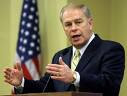 in the House Chambers at the Statehouse. I shall leave it to the print and broadcast media to report on the specifics, but will offer a few personal impressions.
One reason I have generally liked Gov. Strickland has been his vision. While I have a few disagreements with the way the vision has been executed, he deserves much credit for consistently pursuing and clearly articulating his vision for the State of Ohio. Today's speech focused on the challenge of increasing Ohio's employment. Gov. Strickland emphasized that the work of his administration to date has been to lay the infrastructure for future economic growth. He cited numerous special funds and public-private partnerships to build Ohio's renewable energy industry, provide venture capital and training for startup businesses, encourage insourcing to provide jobs for Ohioans, and to increase the market share of Ohio-grown farm products within Ohio. He also is working on the creation of university-private partnerships to help Ohio firms develop innovative products to fuel future economic growth.
He touched on the budgetary issues by noting that the personal property tax remains unfriendly to business growth, especially in the energy sector; university tuitions have increased more slowly in Ohio than in any other state; regulatory reforms have reduced the cost and business-unfriendliness of state government, and that Ohio has 5,021 fewer state employees than at the beginning of his term (January 2007).
The Governor and the General Assembly have the right priorities, and to their credit have aggressively pursued long-term goals, at a time when it would have been very easy to cut back to concentrate on immediate needs. That strategy might work in some states, but Ohio has had so much economic recession for so long, that pursuing a vision like this one is imperative if Ohioans are going to have opportunities in the future.
My greatest objection to his speech lies in the plethora of new programs he has devised to create these public-private partnerships and to foster access to venture capital. Today, these may seem like good ideas, and there is a fair chance that they will work; but he is creating a complex system that will be an administrative nightmare a few years from now.
Now, Gov. Strickland and the General Assembly need to keep an eye on Washington. It is fair to say that federal regulatory policy creates so much overhead on state governments, that it is the primary reason 49 of the 50 states are having difficulty balancing their budgets. At the same time, Washington and Columbus are beginning to work to cross-purposes. While Ohio wants to foster entrepreneurship, the feds want to increase governmental control over the private sector. The time will soon come when fiscal considerations will force us to choose between Ohio's clearly common-sense approach to economic development, and the District of Coercion's ideological approach.
We need to begin freeing Ohio's financial sector from the manipulations of New York. This can be accomplished in two ways: by enabling the use of gold and silver coin in payment of taxes and other transactions, which will help protect us from inflation of the U.S. dollar, and by creating a state bank modeled on North Dakota's to partner with local banks to provide those low-cost loans to entrepreneurs. Both actions will also contribute to a sound currency following Ohio's independence, in the event secession become necessary. By following this approach, which is part of The Ohio Republic's legislative program, he could achieve the goals of his public-private partnerships more simply and much more effectively.
in the House Chambers at the Statehouse. I shall leave it to the print and broadcast media to report on the specifics, but will offer a few personal impressions.One reason I have generally liked Gov. Strickland has been his vision. While I have a few disagreements with the way the vision has been executed, he deserves much credit for consistently pursuing and clearly articulating his vision for the State of Ohio. Today's speech focused on the challenge of increasing Ohio's employment. Gov. Strickland emphasized that the work of his administration to date has been to lay the infrastructure for future economic growth. He cited numerous special funds and public-private partnerships to build Ohio's renewable energy industry, provide venture capital and training for startup businesses, encourage insourcing to provide jobs for Ohioans, and to increase the market share of Ohio-grown farm products within Ohio. He also is working on the creation of university-private partnerships to help Ohio firms develop innovative products to fuel future economic growth.
He touched on the budgetary issues by noting that the personal property tax remains unfriendly to business growth, especially in the energy sector; university tuitions have increased more slowly in Ohio than in any other state; regulatory reforms have reduced the cost and business-unfriendliness of state government, and that Ohio has 5,021 fewer state employees than at the beginning of his term (January 2007).
The Governor and the General Assembly have the right priorities, and to their credit have aggressively pursued long-term goals, at a time when it would have been very easy to cut back to concentrate on immediate needs. That strategy might work in some states, but Ohio has had so much economic recession for so long, that pursuing a vision like this one is imperative if Ohioans are going to have opportunities in the future.
My greatest objection to his speech lies in the plethora of new programs he has devised to create these public-private partnerships and to foster access to venture capital. Today, these may seem like good ideas, and there is a fair chance that they will work; but he is creating a complex system that will be an administrative nightmare a few years from now.
Now, Gov. Strickland and the General Assembly need to keep an eye on Washington. It is fair to say that federal regulatory policy creates so much overhead on state governments, that it is the primary reason 49 of the 50 states are having difficulty balancing their budgets. At the same time, Washington and Columbus are beginning to work to cross-purposes. While Ohio wants to foster entrepreneurship, the feds want to increase governmental control over the private sector. The time will soon come when fiscal considerations will force us to choose between Ohio's clearly common-sense approach to economic development, and the District of Coercion's ideological approach.
We need to begin freeing Ohio's financial sector from the manipulations of New York. This can be accomplished in two ways: by enabling the use of gold and silver coin in payment of taxes and other transactions, which will help protect us from inflation of the U.S. dollar, and by creating a state bank modeled on North Dakota's to partner with local banks to provide those low-cost loans to entrepreneurs. Both actions will also contribute to a sound currency following Ohio's independence, in the event secession become necessary. By following this approach, which is part of The Ohio Republic's legislative program, he could achieve the goals of his public-private partnerships more simply and much more effectively.
Tuesday, January 25, 2011
20 things that should make you angry
From Economic Collapse. Economic Collapse is a little bit conspiracy-theoryish, but the sources are good, though in some cases, you will find the true source only on the second or third click.
#1 U.S. consumers have withdrawn $311 billion more from savings and investment accounts than they have put into them.
#2 15 billion dollars: the total amount of compensation that Goldman Sachs paid out to its employees for 2010.
#3 The number of American families that were booted out of their homes and into the streets set a new all-time record in 2010.
#4 Dozens of packages that we buy in the supermarket have been reduced in size by up to 20%.
#5 One Canadian company is making a ton of money shipping "millions and millions of dollars" worth of manufacturing equipment from factories that are being shut down in the United States over to new factories that are being set up in China.
#6 In America today, the wealthiest 20% own a whopping 93% of all the "financial assets" in the United States.
#7 Only 35 percent of Americans now have enough "emergency savings" to be able to cover three months of living expenses.
#8 47 percent of all Americans now believe that China is the number one economic power in the world.
#9 If the U.S. banking system is healthy, then why does the number of "problem banks" continue to keep increasing? This past week the number of U.S. banks on the unofficial list of problem banks reached 937.
#10 According to former U.S. Labor Secretary Robert Reich, the wealthiest 0.1% of all Americans make as much money as the poorest 120 million.
#11 U.S. housing prices have now fallen further during this economic downturn than they did during the Great Depression of the 1930s.
#12 According to some very disturbing new research, 45 percent of U.S. college students exhibit "no significant gains in learning" after two years in college.
#13 Americans now owe more than $884 billion on student loans, which is a new all-time record.
#14 The United Nations says that the global price of food hit an all-time record high in December, and the price of oil is surging towards $100 a barrel, but the U.S. government continues to insist that we barely have any inflation at all.
#15 The more Americans that are on food stamps the more profits that JP Morgan makes. Today, an all-time record of 43.2 million Americans are on food stamps, and JP Morgan is making a lot of money processing millions of those benefit payments.
#16 Back in 1970, 25 percent of all jobs in the United States were manufacturing jobs. Today, only 9 percent of the jobs in the United States are manufacturing jobs.
#17 Dozens of U.S. states are either implementing tax increases in 2011 or are considering proposals to raise taxes.
#18 The United States has had a negative trade deficit every single year since 1976.
#19 The U.S. national debt has crossed the $14 trillion mark for the first time, and at some point during 2011 it will cross the $15 trillion mark.
#20 The Obama administration is proposing a "universal Internet ID" that would watch, track, monitor and potentially control everything that you do on the Internet.
Virtual buckeye to The Liberty Voice.
#1 U.S. consumers have withdrawn $311 billion more from savings and investment accounts than they have put into them.
#2 15 billion dollars: the total amount of compensation that Goldman Sachs paid out to its employees for 2010.
#3 The number of American families that were booted out of their homes and into the streets set a new all-time record in 2010.
#4 Dozens of packages that we buy in the supermarket have been reduced in size by up to 20%.
#5 One Canadian company is making a ton of money shipping "millions and millions of dollars" worth of manufacturing equipment from factories that are being shut down in the United States over to new factories that are being set up in China.
#6 In America today, the wealthiest 20% own a whopping 93% of all the "financial assets" in the United States.
#7 Only 35 percent of Americans now have enough "emergency savings" to be able to cover three months of living expenses.
#8 47 percent of all Americans now believe that China is the number one economic power in the world.
#9 If the U.S. banking system is healthy, then why does the number of "problem banks" continue to keep increasing? This past week the number of U.S. banks on the unofficial list of problem banks reached 937.
#10 According to former U.S. Labor Secretary Robert Reich, the wealthiest 0.1% of all Americans make as much money as the poorest 120 million.
#11 U.S. housing prices have now fallen further during this economic downturn than they did during the Great Depression of the 1930s.
#12 According to some very disturbing new research, 45 percent of U.S. college students exhibit "no significant gains in learning" after two years in college.
#13 Americans now owe more than $884 billion on student loans, which is a new all-time record.
#14 The United Nations says that the global price of food hit an all-time record high in December, and the price of oil is surging towards $100 a barrel, but the U.S. government continues to insist that we barely have any inflation at all.
#15 The more Americans that are on food stamps the more profits that JP Morgan makes. Today, an all-time record of 43.2 million Americans are on food stamps, and JP Morgan is making a lot of money processing millions of those benefit payments.
#16 Back in 1970, 25 percent of all jobs in the United States were manufacturing jobs. Today, only 9 percent of the jobs in the United States are manufacturing jobs.
#17 Dozens of U.S. states are either implementing tax increases in 2011 or are considering proposals to raise taxes.
#18 The United States has had a negative trade deficit every single year since 1976.
#19 The U.S. national debt has crossed the $14 trillion mark for the first time, and at some point during 2011 it will cross the $15 trillion mark.
#20 The Obama administration is proposing a "universal Internet ID" that would watch, track, monitor and potentially control everything that you do on the Internet.
Virtual buckeye to The Liberty Voice.
Wednesday, November 26, 2008
"Paper Money Is Fraud!"
+[small].jpg)
___On the afternoon of Saturday, November 22nd 2008, over a hundred daughters and sons of the great nation of Ohio assembled in downtown Cleveland. The purpose? To expose the corruption of the central banking cartel and demand the abolition of the Federal Reserve System.
___The date itself marked the ninety-fifth anniversary of the passage of the Federal Reserve Act, which subverted the constitutional ban on issuance of paper money and allowed a private banking enterprise to exercise the singular privilege of printing money for the Federal Government. Originally redeemable in specie (silver) currency, the fraud inherent in such an arrangement became quite apparent in 1929. After the disappearance of large sums of fractional reserve money, frightened depositors descended upon member banks to find that their hard-earned silver had been given to someone else.
___Rather than forcing the banking system to honor their contractual obligations on penalty of imprisonment (a punishment ordinary mortals like you and I would face), the politicians in Washington DC instead devised a convoluted “Rube Goldberg machine” of monetized debt securities in an effort to make the entire scam seem perfectly reasonable and even enlightened. Since then, Federal Reserve Notes have been made “legal tender”, which all U.S. citizens are forced to accept under penalty of law, no longer redeemable in “lawful money”.
___The deception continues to this day, as generation after generation of schoolchildren grow up believing that economics is a such a boring and difficult concept to understand that it is better just to leave the monetary policy of our nation to “experts” who care about such things. That this attitude is a fatal mistake is now becoming clear as the banking system racks up record profits while the losses are once again foisted upon the gullible American taxpayers. Simultaneously, the stolen purchasing power is used by the Federal government to finance their Imperial wars of global conquest and pseudo-legal domestic “surveillance” operations while the schools and bridges in our States crumble to dust.
___But on November 22nd, brave patriots from across the continent assembled in front of all Federal Reserve regional banks and made their voices heard. “No more bailouts! End the Fed!”, we shouted. “Inflation is theft! End the Fed!” With signs and voices raised in protest, we marched through the centers of our great cities, demanding an end to the central banking scheme once and for all.
___The alternative to continued servitude under the political and monetary dictatorship of the American Empire? Restoration of national sovereignty to the Republic of Ohio and prompt implementation of circulating currency physically consisting of silver (or other precious metals). In my opinion, any efforts to reform the system and bring it under control while still allowing the bankers to create fiat money out of nothing are doomed to fail. And since the Federal government in Washington has proved themselves to be unredeemably corrupt by perpetuating this unjust and unconstitutional system, the time has come to wrest out State sovereignty back from the Federals who have abused the privilege.
___More information about the “End The Fed” movement can be found at: http://www.endthefed.us/. Thanks to the Campaign for Liberty, the Ohio Freedom Alliance, Peace Chicken, and everyone else who helped to organize this glorious event.
___The date itself marked the ninety-fifth anniversary of the passage of the Federal Reserve Act, which subverted the constitutional ban on issuance of paper money and allowed a private banking enterprise to exercise the singular privilege of printing money for the Federal Government. Originally redeemable in specie (silver) currency, the fraud inherent in such an arrangement became quite apparent in 1929. After the disappearance of large sums of fractional reserve money, frightened depositors descended upon member banks to find that their hard-earned silver had been given to someone else.
___Rather than forcing the banking system to honor their contractual obligations on penalty of imprisonment (a punishment ordinary mortals like you and I would face), the politicians in Washington DC instead devised a convoluted “Rube Goldberg machine” of monetized debt securities in an effort to make the entire scam seem perfectly reasonable and even enlightened. Since then, Federal Reserve Notes have been made “legal tender”, which all U.S. citizens are forced to accept under penalty of law, no longer redeemable in “lawful money”.
___The deception continues to this day, as generation after generation of schoolchildren grow up believing that economics is a such a boring and difficult concept to understand that it is better just to leave the monetary policy of our nation to “experts” who care about such things. That this attitude is a fatal mistake is now becoming clear as the banking system racks up record profits while the losses are once again foisted upon the gullible American taxpayers. Simultaneously, the stolen purchasing power is used by the Federal government to finance their Imperial wars of global conquest and pseudo-legal domestic “surveillance” operations while the schools and bridges in our States crumble to dust.
___But on November 22nd, brave patriots from across the continent assembled in front of all Federal Reserve regional banks and made their voices heard. “No more bailouts! End the Fed!”, we shouted. “Inflation is theft! End the Fed!” With signs and voices raised in protest, we marched through the centers of our great cities, demanding an end to the central banking scheme once and for all.
___The alternative to continued servitude under the political and monetary dictatorship of the American Empire? Restoration of national sovereignty to the Republic of Ohio and prompt implementation of circulating currency physically consisting of silver (or other precious metals). In my opinion, any efforts to reform the system and bring it under control while still allowing the bankers to create fiat money out of nothing are doomed to fail. And since the Federal government in Washington has proved themselves to be unredeemably corrupt by perpetuating this unjust and unconstitutional system, the time has come to wrest out State sovereignty back from the Federals who have abused the privilege.
___More information about the “End The Fed” movement can be found at: http://www.endthefed.us/. Thanks to the Campaign for Liberty, the Ohio Freedom Alliance, Peace Chicken, and everyone else who helped to organize this glorious event.
Friday, February 12, 2010
Of Tea Parties and bad pennies
Patrick Buchanan is not one of my favorite commentators (abrasion level is too high to suit me), but he cameup with a beautiful phrase that bears repeating, "secession of the heart" when he weighed in on the huge amount of commentary about Tea Parties. (including a surprisingly balanced account of the Ohio Tea Party movement from The Other Paper in Columbus).
Here is Mr. Buchanan's take, in a piece entitled "Secession in the Air":
You might say we keep coming back at them like a bad penny (to use a very old cliché). Speaking of which, the feds decided to redesign the reverse of the penny. The ceremony rolling it out has the propagandists touting how Lincoln and the shield design proclaim the "indivisibility" of the union. I guess they think that we'll cheerfully reduce ourselves to slavery as long as the union is preserved.

They have another think coming.
Virtual buckeye to Rebellion.
Here is Mr. Buchanan's take, in a piece entitled "Secession in the Air":
What called the Tea Party into existence?
Some are angry over unchecked immigration and the failure to control our borders and send the illegals back. Some are angry over the loss of manufacturing jobs. Some are angry over winless wars in Afghanistan and Iraq. Some are angry over ethnic preferences they see as favoring minorities over them.
What they agree upon, however, is that they have been treading water for a decade, working harder and harder with little or no improvement in their family standard of living. They see the government as taking more of their income in taxes, seeking more control over their institutions, creating entitlements for others not them, plunging the nation into unpayable debt, and inviting inflation or a default that can wipe out what they have saved.
And there is nothing they can do about it, for they are politically powerless. By their gatherings, numbers, mockery of elites and militancy, however, they get a sense of the power that they do not have.
Their repeated reappearance on the national stage, in new incarnations, should be a fire bell in the night to the establishment of both parties. For it testifies to their belief and that of millions more that the state they detest is at war with the country they love.
The secession taking place in America is a secession of the heart — of people who have come to believe the government is them, and not us. (Emphasis added)
You might say we keep coming back at them like a bad penny (to use a very old cliché). Speaking of which, the feds decided to redesign the reverse of the penny. The ceremony rolling it out has the propagandists touting how Lincoln and the shield design proclaim the "indivisibility" of the union. I guess they think that we'll cheerfully reduce ourselves to slavery as long as the union is preserved.
They have another think coming.
Virtual buckeye to Rebellion.
Saturday, September 4, 2010
Understanding the gold standard
Libertarians have been calling for a gold standard to replace our fiat currency (meaning, currency backed by nothing -- or even worse, currency backed by debt). But there are two kinds of gold standards, as Michael Rozeff points out in DumpDC: a free-market gold standard, which ensures that there is a natural relationship between gold (or silver) and economic activity; and a gold standard based on government-created currency. With a natural relationship (which requires that there is no governmental intervention, event that of coining the money), inflation is rare and mild, and the value of money tends to rise over time, protecting the savings of the people.
The alternative, which, as Mr. Rozeff points out, is the one being pressed by the central bankers, is a gold-based world currency, which will in time become a fiat currency, just as the dollar did -- leading to periodic panics/depressions, and robbery of the people by the central bankers.
The take-home is, we must watch what officials are trying to push on us.
Only a return to a really free market, currency included, will act in the interest of all of us. Otherwise, we will continue the same old, same old, until we are robbed into slavery by the bankers and their friends in government.
Read the link to gain a greater understanding of the underlying ideas.
The alternative, which, as Mr. Rozeff points out, is the one being pressed by the central bankers, is a gold-based world currency, which will in time become a fiat currency, just as the dollar did -- leading to periodic panics/depressions, and robbery of the people by the central bankers.
The take-home is, we must watch what officials are trying to push on us.
Only a return to a really free market, currency included, will act in the interest of all of us. Otherwise, we will continue the same old, same old, until we are robbed into slavery by the bankers and their friends in government.
Read the link to gain a greater understanding of the underlying ideas.
Tuesday, February 3, 2009
Confused by the bailout?
Maybe this will help. Sarah Grillo at Vermont Commons explains it to us in plain English.
Here are the essential points:
Letting us spend the money ourselves (through tax cuts) makes more sense than providing lump sums, because we are more likely to spend them when they are added to our paycheck, than when we get a larger check to take to the bank.
However, if we take a short term view of economic recovery, we will lose sight of the deeply entrenched issues that led to our current plight:
"The problems with our economy, in actuality," Ms. Grillo writes, "are not limited just to bad decisions by investors, or the collapse of short term bubbles in the housing market or dot-coms. The problems are foundational, and run far deeper than most people can possibly imagine."
Examples:
* More than 50 years of U.S. Government manipulation of statistics to mask the reality. Her example of "hedonic pricing" for the Consumer Price Index is particularly interesting.
* As I have mentioned several times in this space, the Federal Reserve has been creating money out of thin air -- or if you insist, backed by debt, which in essence is the same thing:
She urges us to check out Jim Kunstler's take on this phenomena, known as “peak money”: http://jameshowardkunstler.typepad.com/clusterfuck_nation/2007/11/peak-money.html.
* Finally, she says our biggest problem is our "aversion to sustainability." To understand how our monetary system is, in fact, unsustainable, she points us to The Crash Course at http://www.chrismartenson.com/, an online PowerPoint presentation that does an excellent job of breaking down our economic crisis step by step and tying it into other problems like the peaking of our energy resources.
The spiritual benefits of community may well cause us to decide one day that the adjustment was well worth the pain.
Here are the essential points:
Letting us spend the money ourselves (through tax cuts) makes more sense than providing lump sums, because we are more likely to spend them when they are added to our paycheck, than when we get a larger check to take to the bank.
However, if we take a short term view of economic recovery, we will lose sight of the deeply entrenched issues that led to our current plight:
"The problems with our economy, in actuality," Ms. Grillo writes, "are not limited just to bad decisions by investors, or the collapse of short term bubbles in the housing market or dot-coms. The problems are foundational, and run far deeper than most people can possibly imagine."
Examples:
* More than 50 years of U.S. Government manipulation of statistics to mask the reality. Her example of "hedonic pricing" for the Consumer Price Index is particularly interesting.
* As I have mentioned several times in this space, the Federal Reserve has been creating money out of thin air -- or if you insist, backed by debt, which in essence is the same thing:
"Our debt-based money system must continually expand, as new money must be printed to cover the interest payments on the government's outstanding debt; it is an exponential system by its very design. And exponential systems always reach a point of peaking, which is simply a rule of living on a finite planet that many people seem to think we can avoid... As strong and as popular as it may be, it is manufactured in an unsustainable process, and moreover, with our country in debt in the tens of trillions, and our money losing value exponentially via inflation, it only seems realistic that the dollar may, some day, become worthless."
She urges us to check out Jim Kunstler's take on this phenomena, known as “peak money”: http://jameshowardkunstler.typepad.com/clusterfuck_nation/2007/11/peak-money.html.
* Finally, she says our biggest problem is our "aversion to sustainability." To understand how our monetary system is, in fact, unsustainable, she points us to The Crash Course at http://www.chrismartenson.com/, an online PowerPoint presentation that does an excellent job of breaking down our economic crisis step by step and tying it into other problems like the peaking of our energy resources.
"So will Obama's plan work? It may mean a few extra dollars in my pocket, for sure, but I think it is a band-aid on a dying patient. Realistically, I think the best bet for anyone now is to buy gold, learn a trade, and invest in local resources. Which, as I see it, isn't such a bad alternative at all."
The spiritual benefits of community may well cause us to decide one day that the adjustment was well worth the pain.
Wednesday, August 25, 2010
Inflation, simplified
This is the clearest explanation I have heard of what taking the dollar off the gold standard (thanks to the Federal Reserve Bank) has done to the value of our money:
In 1933, Americans were paid $20.67 for each ounce of gold they surrendered. If they had simply lost one of those ounces behind the sofa, today they could exchange it for over $1,200. But if they had taken that $20.67 and misplaced it until today, that amount of money would only buy what a mere $1.32 would have bought them the day they turned in their gold.
Virtual buckeyes to Tammy Bertram and Teri Cain Owens, via Facebook.
In 1933, Americans were paid $20.67 for each ounce of gold they surrendered. If they had simply lost one of those ounces behind the sofa, today they could exchange it for over $1,200. But if they had taken that $20.67 and misplaced it until today, that amount of money would only buy what a mere $1.32 would have bought them the day they turned in their gold.
Virtual buckeyes to Tammy Bertram and Teri Cain Owens, via Facebook.
Friday, January 16, 2009
Common sense about the bailouts
 Not everyone has bought in to the idea that printing more and more Federal Reserve Notes is the solution to our economic crisis. Two articles published today are especially good:
Robert Romano at The Daily Grind* calls it “Stimulating Debt, Abandoning Hope.” :
“Never mind that the government has ducked any responsibility for creating the current mess. Or that it has failed to enact—or even propose—reforming and repealing the very policies that caused the financial system to crack in the first place: too much credit, too low interest rates, regulations by government to force banks to give out loans that ultimately could not be repaid... ad infinitum, ad nausea[m].
“Beneath this abdication of accountability is a complete lack of faith by politicians in the very people they represent. And, of course, in the American spirit of free enterprise.”
The “stimulus” package, Mr. Romano writes, is not based on increased revenues, but on “a desire by politicians to exacerbate the self-same economic policies that caused the crisis to begin with.”
“It was not government that invented the steam engine that powered factories and mills, locomotives and steam boats; it was the individual initiative of several engineers over the course of hundreds of years, including James Watt and Richard Trevithick. Nor was it government that forever revolutionized the process of making cars—and just about everything else that is manufactured; it was the initiative of Henry Ford and his assembly line that created millions of jobs and made the 20th Century the era of the automobile. And again it was not government that transformed and made more efficient the use of computers; it was independent innovators like Steve Jobs and Bill Gates.”
Basic truth: Government cannot create wealth -- never has, never will.
The second is Glenn Sheller’s piece in today’s Columbus Dispatch. He applies some good old-fashioned Ohio horse-sense, first by using a medical analogy:
The second is Glenn Sheller’s piece in today’s Columbus Dispatch. He applies some good old-fashioned Ohio horse-sense, first by using a medical analogy:
“The economy is sick because its arteries are clogged with bad investments, bad debt, bad financial managers and bad companies. And these things grew to such toxic levels because they got a pass from bad regulators and from bad politicians who short-circuited the market forces that would have punished such foolishness long before it grew big enough to shake the financial underpinnings of the entire planet.
“The economy seeks to purge itself of these toxins, and only after it does can it regain health and resume growth. But all efforts so far seem directed toward preventing that from happening. We don't want to let foreclosure eliminate bad mortgages, we don't want to allow the failure of financial institutions that are built on bad decisions and rotten assets. We don't want to let companies that are ill-managed, overburdened and underperforming go bankrupt.”
“It's like saying that the cure for hangover is to drink more alcohol. A hangover can be postponed by more drinking, but that ‘solution’ leads to fatal alcohol poisoning. Assuming that nobody wants that, then sooner or later the agony of the hangover must be endured in order to return to sobriety and health.”
He concludes that we are acting like lemmings. We are trusting the same people who got us into the mess to get us out of it. His conclusion: “That's sounds more than just counterintuitive. That sounds crazy.”
Why does it sound crazy? I don’t know the exact M1 figures, but I do know that the bailout has created at least $2 trillion since last September out of nothing. Continuing along this path will flood our economy with too many dollars chasing too few goods and services – which is the definition of inflation. Flooding it too much will cause the patient to die of congestive heart failure, or hyperinflation.
If you want to know what that’s like, check out this article about Zimbabwe dollar from Agence France-Presse, which uses numbers I have never seen outside of astronomy.
* The photo is also from The Daily Grind.
Subscribe to:
Posts (Atom)